Volkswagen AC Repair Services in North Charleston, SC
When AC Behavior Changes
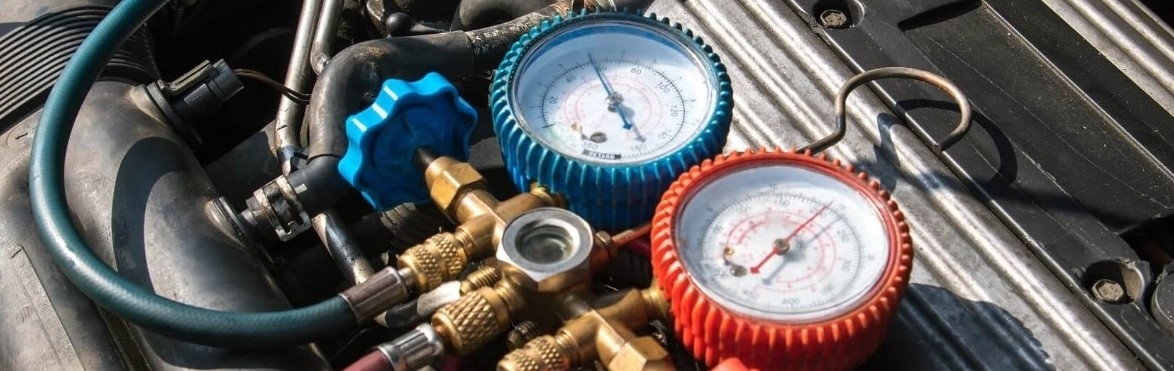
An air conditioner rarely quits all at once; more often it starts to smell stale, loses a little cooling each week or cycles in a way the driver can hear. At Stokes Volkswagen in North Charleston, SC, each of those complaints begins with testing, so the technician knows where the problem lives before suggesting a part. Air conditioning on all makes and models comes through these bays, compact hatchbacks and work vans included. The opening stretch of every visit goes to reading pressures, watching the compressor clutch and checking the evaporator drain. You then get a plain account of the findings and decide what happens next.
Air Conditioning Explained for Drivers Near North Charleston
Every automotive air conditioner moves heat around a closed loop. The compressor squeezes refrigerant into a hot, high-pressure gas, the condenser at the front of the vehicle sheds that heat to the outside air, and an expansion device drops the pressure just before the refrigerant enters the evaporator tucked inside the dash. There it boils off, pulling heat out of the cabin air the blower pushes across its fins.
Cooling the air also wrings water out of it, and that water collects on the evaporator before running down a short drain tube that exits under the vehicle. The small puddle under a parked car on a muggy afternoon is usually the drain doing its job. When the tube kinks or clogs with debris, water pools in the evaporator case, and the damp, dark space becomes a home for mold and bacteria that give the vents a sour smell.
- The compressor clutch is a magnetic coupling on the nose of the compressor that locks the pulley to the shaft only when the climate system asks for cooling.
- A pressure switch or sensor watches the refrigerant side and can keep the clutch from engaging when the reading is too low or too high.
- The evaporator drain is a short rubber spout at the bottom of the evaporator case, usually near the passenger side of the firewall.
- Refrigerant carries a little oil through the loop, so the spot where a leak escapes often wears a damp film that collects road dust.
- A fluorescent dye can be added to the refrigerant during service, and it glows under an ultraviolet lamp to mark even a slow seep.
A tight loop keeps the same refrigerant for many years, so cooling that fades over a season points to a leak somewhere along the loop. Common escape points include the compressor shaft seal, the O-rings at hose joints, the service port valves and the evaporator itself, which can corrode from the inside when water sits around it. Pinning down the exact spot matters, because refilling a leaking system only buys time.
In many drivers' minds refrigerant is a consumable like engine oil, something that gets used up and needs replacing now and then. In a healthy system it is never consumed, and the same refrigerant circulates for the life of the vehicle. A low reading therefore means some has escaped, and the leak that let it out keeps working after the system is refilled. Refilling before the leak is found also sends more of it into the atmosphere over time.
AC Symptoms Worth Writing Down
A musty smell during the opening minutes of a drive is one of the most common climate complaints, and it is easy to mistake for a dirty cabin. The odor usually comes from growth on the evaporator fins, fed by water that never drained away, and it tends to be strongest right after the system starts.
Compressor trouble announces itself differently. A clutch that slips or never pulls in leaves the vents blowing air at outside temperature, while a clutch whose air gap has widened may engage when the engine is cool and drop out once things heat up. A rattle or growl that appears when the AC button is pressed, and fades when it is switched off, points toward the compressor or its clutch bearing.
- A sour or mildew odor from the vents that is strongest just after start-up and fades as the drive goes on.
- Water soaking the front passenger floor mat, a sign the evaporator drain is backing up into the cabin.
- Cooling that has slipped a little each summer, with no single day when it suddenly stopped.
- A click from under the hood when the AC is switched on, followed by no change at the vents.
- An oily, dusty patch on a hose fitting or on the face of the compressor, often the visible end of a slow leak.
Not every smell starts at the evaporator. A water leak at a door or sunroof drain, a spilled drink soaked into the carpet or a forgotten gym bag can all make a cabin smell damp, and a cabin filter left in place too long can hold odors of its own. The technician checks those sources so a cleaning service is not sold for a problem in the carpet.
A clogged drain can let water reach wiring and modules under the dash, and a slow leak lets moisture into the loop, where it mixes with the oil and wears the compressor from the inside. Catching either one while the hardware is still sound keeps the work to a seal, a cleaning or a refill.
The AC Repair Visits We Offer
Three focused services handle the odor, leak and compressor complaints that bring most drivers to the climate bay.
Evaporator Odor Treatment and Drain Clearing
The technician locates the evaporator drain under the vehicle and confirms that water leaves it steadily while the system runs. A blocked tube is cleared, and the area around the evaporator case is checked for standing water. Where the odor comes from growth on the fins, a cleaning foam made for evaporators can be applied through the case or the drain, following the product directions. The cabin filter is inspected in the same pass, and you hear whether it was holding odor of its own.
Refrigerant Leak Tracing and Refrigerant Service
A leak is tracked with an electronic detector, ultraviolet dye or both, moving along each hose, fitting and seal until the escape point turns up. Some evaporator leaks can only be confirmed at the drain or a vent, and the technician explains what that means for the repair. Once the faulty seal or part is replaced, a vacuum pump pulls the loop down and the gauges must stay put to prove it is tight. A refrigerant service then refills the loop to the specified weight.
Compressor Clutch and Engagement Testing
The technician watches whether the clutch pulls in when cooling is requested and whether the system is actually sending that command. Clutch coil resistance, the air gap and the pressure switch signals are checked, since any of them can keep the compressor idle. A worn clutch can sometimes be replaced without opening the refrigerant side, depending on the vehicle. If the pump inside has worn out, you see the evidence before a replacement is priced.
How an AC Visit Moves From Gauges to Road Test
The visit opens with your description of the complaint, including when the smell or warm air shows up and whether anyone has added refrigerant recently. The technician then runs the system with a thermometer in the center vent and gauges on the service ports, recording how it behaves at idle and at a steady higher engine speed.
A commuter sedan arrived after its owner felt lukewarm air at red lights on the way home from work, then cooling off again once traffic moved. A parts store can of refrigerant was already riding in the trunk, on the theory that the system was running low. The pressures on both sides matched the chart for the day, and the evaporator temperature sensor showed cold air leaving the core. The real culprit was the small mix flap actuator behind the dash, whose plastic gear had lost teeth and let the door wander toward the heater core, and the warm stretches only happened to line up with the stops. A new motor and a calibration run fixed it, and the can went home unopened.
- Vent temperature and both pressure readings are logged before anything is adjusted, giving a baseline for every later test.
- The compressor command, the clutch and the cooling fans are checked with a scan tool where the vehicle supports it.
- Leak tracing covers the whole loop, from the compressor to the evaporator drain, so a second leak is not missed after the first one is found.
- Readings, photos of any leak and a priced plan reach you before a wrench turns, and the go-ahead is yours to give.
After the repair, the loop is pulled into deep vacuum and watched to confirm it is sealed, and the refrigerant amount on the under-hood label is restored by weight. With the cabin shut, the technician runs the climate system, checks that the drain is dripping under the vehicle and takes a final vent reading on a short drive.
Morning drop-offs give the technician room to let a system run long enough for slow faults to show themselves. Our North Charleston climate bay takes all makes and models, imported or domestic. Drain clearing and many leak repairs are often finished by afternoon when the schedule and parts allow. A compressor that must be ordered is flagged as soon as the need is known.
The Stokes Volkswagen Approach to AC Repair
Volkswagen climate systems are a daily part of the work at Stokes Volkswagen, and technicians with Volkswagen factory training know how the Climatronic automatic controls fitted to many models manage the compressor and the temperature doors. Volkswagen diagnostic software lets them read climate sensor values, command the compressor and run a basic settings routine that teaches the door motors their end positions after a repair.
On a Tiguan or an Atlas, the specified refrigerant, its fill amount and the compressor oil are confirmed against the VIN before the service equipment connects. Where an Atlas carries a rear climate unit, its longer refrigerant lines get their own leak check.
- Genuine Volkswagen compressors, flap actuators and O-rings can be ordered when an owner wants the original parts back in the dash.
- Volkswagen technical bulletins that touch the Climatronic system on your model are looked up by VIN before the car leaves.
- Your Volkswagen service file records the pressures, the leak location and the refrigerant amount restored.
Find Stokes Volkswagen in North Charleston, SC
AC Repair Customers From Towns Near North Charleston
Summer afternoons in North Charleston test a climate system hard, and a car that has baked in an open shopping center lot shows within minutes whether its AC still keeps up. Owners who drive US-52 to jobs in Goose Creek or Moncks Corner tend to notice a weak compressor or a musty smell early, and many of them bring those vehicles to Stokes Volkswagen for testing.
- Moncks Corner, SC
- Summerville, SC
- James Island, SC
- Hanahan, SC
- West Ashley, SC
- Goose Creek, SC
- Daniel Island, SC
- Ladson, SC
A short test settles whether the smell, the warm air or the clicking needs a cleaning, a seal or a compressor. Knowing which one comes first keeps the estimate focused on the real fault.
What We Hear About AC Repair
Drivers ask our climate technicians these questions most often about odors, leaks and compressors.
Q: What causes a musty smell from the AC vents?
Q: Is water dripping under my car from the AC normal?
Q: How do you find a refrigerant leak that is too small to see?
Q: Why does my AC compressor click on and off so often?
Q: Does your climate bay take vehicles from every manufacturer?
Mention whether the issue is a smell, warm air or a noise when you book, so the technician can plan which tests run first.
Any receipt for refrigerant added elsewhere is useful to bring along.
Line Up AC Repair With Stokes Volkswagen
A musty smell and a slow leak both get worse with each hot week, one by feeding more growth and the other by letting moisture into the loop. Testing now keeps the work to a drain, a seal or a cleaning before the compressor is involved.
Every finding is listed separately with its own price, and you choose what goes ahead. Parts that still work stay on the vehicle.
Use the online scheduler or reach the Stokes Volkswagen service desk by phone to set up an AC test. A note about when the trouble appears, at start-up, at idle or on the highway, helps the technician recreate it.
Service Specials

Vehicle Diagnostics

Brake Pad & Rotor Replacement

Legacy VW Diagnostic Special

VW Battery Inspection

Premium Oil Service
VW Air Filter Special

Volkswagen Alignment
Brake Fluid Exchange

Take care of your VW now through December 31, and choose a gift card from hundreds of top brands.